
Web Design · Aug 25, 2026
AI Website Design in 2026: What Actually Works for Small Businesses
AI is reshaping how small business websites are built, but not in the way most headlines suggest. Here is what actually earns its keep and what overpromises.
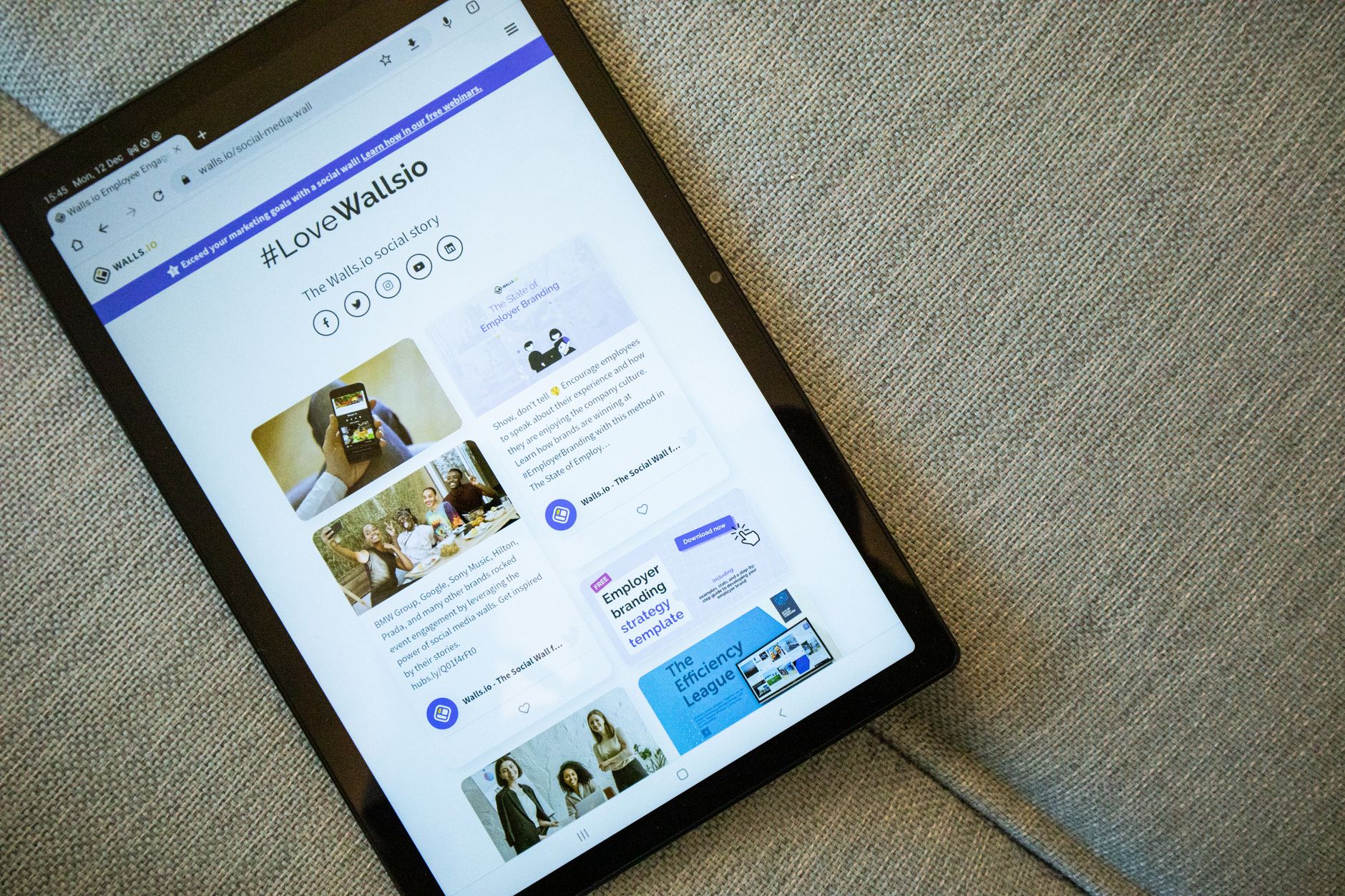
AI is reshaping how small business websites are built, but not in the way most headlines suggest. If you run a service business and you have been watching the wave of AI tools roll through, the honest picture is this: AI is genuinely useful for specific, bounded tasks. It is not a replacement for the strategic thinking, brand judgment, and conversion architecture that actually determine whether your website generates leads or wastes budget.
The small businesses winning online in 2026 are not debating whether to use AI. They are already using it, but only in the places where it earns its keep. Here is what that looks like in practice.
Where AI Actually Helps
AI has become a strong research and drafting partner. If you feed it a list of competitor service pages and ask it to identify the shared structure, the missing subtopics, and the questions real customers are asking, you get a sharper content brief in ten minutes than most agencies produce in a week. That output still needs a human to sanity-check it, but the floor has risen dramatically.
First-draft copy is where AI saves real hours. It generates decent starting structures for service pages, about sections, and feature descriptions. The key word is first-draft. AI is a strong first-draft writer and a mediocre final-draft writer. If you use it as the former, you save time. If you use it as the latter, you produce the flat, pattern-matched prose that Google's AI Overviews now actively deprioritize as unoriginal.
Alt text, meta descriptions, and schema markup are high-leverage SEO surfaces that most small business sites ignore. AI handles them well because the tasks are bounded and easy to verify. Schema generation, in particular, is a legitimate shortcut, but you still need to know which structured data types to emit and which to skip.
Image compression and optimization are practical wins. Upscaling hero photos, background removal, and WebP conversion used to require real cost. Now they are routine. The performance benefit is concrete: smaller images mean faster load times, and page speed is one of the ranking signals Google still weighs heavily.
Where AI Overpromises
The biggest mistake small business owners make is handing AI the entire website build. AI website builders in 2026 are SEO-safe, meaning they produce valid HTML and do not block crawlers. They are almost never SEO-strong. That distinction is the single most consequential factor in whether your site grows or plateaus.
AI cannot interview your best customers. It cannot identify what makes your service genuinely different from the business down the street. It cannot make decisions about what information appears where, how to structure navigation for different buyer journeys, or which social proof to emphasize next to your pricing. Those are conversion architecture decisions, and they determine whether your website generates enquiries or wastes your marketing budget.
Design systems are another blind spot. AI generates individual design elements competently but struggles to maintain visual consistency across dozens of pages. The cohesive typography hierarchies, spacing systems, and color interactions that make a website feel professional still require human design judgment.
What the Research Actually Shows
The numbers are clarifying. Around 68 percent of U.S. small businesses now use AI regularly. AI Overviews appear on roughly half of U.S. Google searches and have cut click-through rates on affected queries by around 58 percent for the top organic result. That means ranking is no longer enough. You have to structure content to be extractable as an AI answer, with direct-answer sentences early on and well-organized sections that AI tools can cite.
Google's own research found that a tenth-of-a-second improvement in mobile site speed improved retail conversion rates by over 8 percent. For a service business where a single converted lead can be worth thousands of dollars, the math on performance optimization is not abstract.
And the content authenticity angle matters now more than ever. AI-generated sites that ship copy without human rewriting read like AI copy, and the search layer is starting to detect that. Pages with original photography consistently outperform pages with stock imagery on conversion rates, and the gap is widening as audiences get better at identifying non-authentic visuals.
The Practical Playbook
Use AI for what it is good at: research, first-draft copy that a human will edit, alt text, schema generation, image compression, and competitive analysis. Keep humans in charge of positioning, homepage strategy, conversion architecture, brand voice, and any final-draft content that represents your business to the public.
Measure what matters. Track AI Overview citations, not just organic rankings. Track Largest Contentful Paint and Interaction to Next Paint, not just a speed score. Track qualified leads, not just traffic volume.
A fast, clear, trustworthy website built for mobile, with authentic content and a conversion-focused structure, outperforms an AI-built site that skipped strategy. That has been true for years. In 2026, the gap is wider because the tools are better and the bar is higher.
At Gone Fishing Labs, we build custom sites with AI-assisted workflows, the right blend of human strategy and AI efficiency. If your website is more than three years old, or if it was built from a template and it is not producing the leads you expected, this is a good year to fix that.
Need help with a website or automation project? Talk with Gone Fishing Labs.